



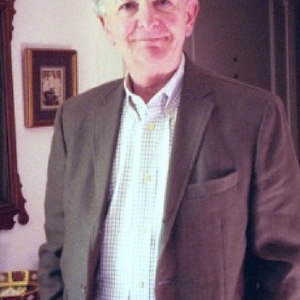

Ralph L. Rosnow
Methodological, statistical, conceptual, and related topics and issues in the practice and understanding of research with human participants are broad, long-time interests. Beyond that, my students and I have explored variables influencing and factors moderating persuasion and opinion change, the formation of impressions and attitudes, interpersonal acumen (reading and misreading people's actions and intentions), the circumstances and characteristics of rumor and gossip, and some aspects of other constructs illustrative of the sociopsychological context of our understanding of human nature and the processual nature of behavior.
For over 50 years, I have collaborated with my old friend and colleague, Robert Rosenthal, on studies, books, articles, and chapters in the area of research methodology, data analysis, and related topics. Openly available here are scanned copies of full texts of two books for which we now have the rights: (1) the 2008 3rd edition of Essentials of Behavioral Research: Methods and Data Analysis and (2) People Studying People: Artifacts and Ethics in Behavioral Research. You are welcome to freely view and download them for educational purposes, research, or any other noncommercial use. Simply click on the FILES tab at the top of this page, choose the highlighted title of either book, and click on View/Download. The books are also available in Harvard University's DASH repository; click the PUBLICATIONS tab at the top of this page, then click on the title Essentials of Behavioral Research or the title People Studying People, and once directed to the book's site, choose View/Open.
Full-text scanned copies of three additional books (for which my coauthors and I now have the rights) are also openly available here by clicking on the FILES tab at the top of this page, then on a highlighted title of interest, and then choosing View/Download. The books are (3) Writing Papers in Psychology (9th edition, coauthored with Mimi Rosnow; this is a student manual with tips, guidelines, and illustrative examples of proposals, research papers, literature reviews, poster presentations, and concise handout reports); (4) Paradigms in Transition: The Methodology of Social Inquiry; and (5) Rumor and Gossip: The Social Psychology of Hearsay (coauthored with Gary Alan Fine; this is an older book, although it may stimulate some enterprising students to want to learn more about current research and insights internationally).
Primary Interests:
- Applied Social Psychology
- Attitudes and Beliefs
- Interpersonal Processes
- Research Methods, Assessment
- Social Cognition
Note from the Network: The holder of this profile has certified having all necessary rights, licenses, and authorization to post the files listed below. Visitors are welcome to copy or use any files for noncommercial or journalistic purposes provided they credit the profile holder and cite this page as the source.
Image Gallery
Other Files
Books:
- 1975. The volunteer subject (R. Rosenthal & R. L. Rosnow). Wiley-Interscience.
- 1981. Paradigms in transition: The methodology of social inquiry (R. L. Rosnow). Oxford University Press. (Copyright reverted to Rosnow.)
- 1985. Contrast analysis: Focused comparisons in the analysis of variance (R. Rosenthal & R. L. Rosnow). Cambridge University Press.
- 1986. Contextualism and understanding in behavioral science: Implications for research and theory (R. L. Rosnow & M. Georgoudi, Eds.). Praeger. (Contributors included: I. Altman, T. O. Blank, R. A. Dixon, J. S. Efran, M. Georgoudi, G. Gerbner, C. K. Germer, R. E. Lana, J. V. Lerner, R. M. Lerner, M. D. Lukens, W. J. McGuire, G. E. McKechnie, J. Meyowitz, J. G. Morawski, T. R. Sarbin, J. Shotter, and J. Veroff.)
- 1997. People studying people: Artifacts and ethics in behavioral research (R. L. Rosnow & R. Rosenthal). W. H. Freeman. (Copyright reverted to Rosnow and Rosenthal.)
- 2000. Contrasts and effect sizes in behavioral research: A correlational approach (R. Rosenthal, R. L. Rosnow, & D. B. Rubin). Cambridge University Press.
- 2008. Essentials of behavioral research: Methods and data analysis, 3rd edition (R. Rosenthal & R. L. Rosnow). McGraw-Hill. (Copyright reverted to Rosenthal and Rosnow.)
- 2009. Artifacts in behavioral research (Re-issue of three books: Artifact in Behavioral Research, Experimenter Effects in Behavioral Research, and The Volunteer Subject). (Foreword by A. E. Kazdin). Oxford University Press.
- 2013. Beginning behavioral research: A conceptual primer, 7th edition (R. L. Rosnow & R. Rosenthal). Pearson.
Journal Articles:
- 1989. Statistical procedures and the justification of knowledge in psychological science (R. L. Rosnow & R. Rosenthal). American Psychologist, 44, 1276-1284.
- 1991. Inside rumor: A personal journey (R. L. Rosnow). American Psychologist, 46, 484-496.
- 1994. Intelligence and the epistemics of interpersonal acumen (conceptual model and data) (R. L. Rosnow, A. A. Skleder, M. E. Jaeger, B. Rind). Intelligence, 19, 93-116.
- 1995. "Some things you learn aren't so": Cohen's paradox, Asch's paradigm, and the interpretation of interaction. Psychological Science (R. L. Rosnow & R. Rosenthal), 6, 3-9.
- 1996. Computing contrasts, effect sizes, and counternulls on other people's published data: General procedures for research consumers (R. L. Rosnow & R. Rosenthal). Psychological Methods, 1, 331-340.
- 1997. Hedgehogs, foxes, and the evolving social contract in psychological science: Ethical challenges and methodological opportunities (R. L. Rosnow). Psychological Methods, 2, 345--356.
- 2000. Contrasts and correlations in effect-size estimation (R. L. Rosnow, R. Rosenthal, & D. B. Rubin). Psychological Science, 11, 446-453.
- 2003. Effect sizes for experimenting psychologists (R. L. Rosnow & R. Rosenthal). Canadian Journal of Experimental Psychology, vol. 57, pp. 221-237. Formula noted in Table 1 should read: 1/2*loge[(1+r)/(1-r)].
- 2009. Effect sizes: Why, when, and how to use them (R. L. Rosnow & R. Rosenthal). Zeitschrift fur Psychologie/Journal of Psychology, 217(1), 6-14.
Other Publications:
- 2001. Rumor and gossip in interpersonal interaction and beyond: A social exchange perspective (R. L. Rosnow). In R. M. Kolwalski (Ed.), Behaving badly: Aversive behaviors in interpersonal relationships (pp. 203-232). American Psychological Association Press.
- 2013. Ethics and quantitative methods (R. L. Rosnow & R. Rosenthal). In T. D. Little (Ed.), Oxford handbook of quantitative methods (Vol. 1, pp. 31-53). Oxford University Press.
Courses Taught:
- Graduate Course in Data Analysis
- Graduate Course in Research Methods
- Graduate Seminar on Social Psychology
- Undergraduate Course in Research Methods
Ralph L. Rosnow
Radnor, Pennsylvania 19087
United States of America
